Beyond the Podium: How Indonesia’s Top Schools Are Redefining Global Competence Through Worldskills Excellence
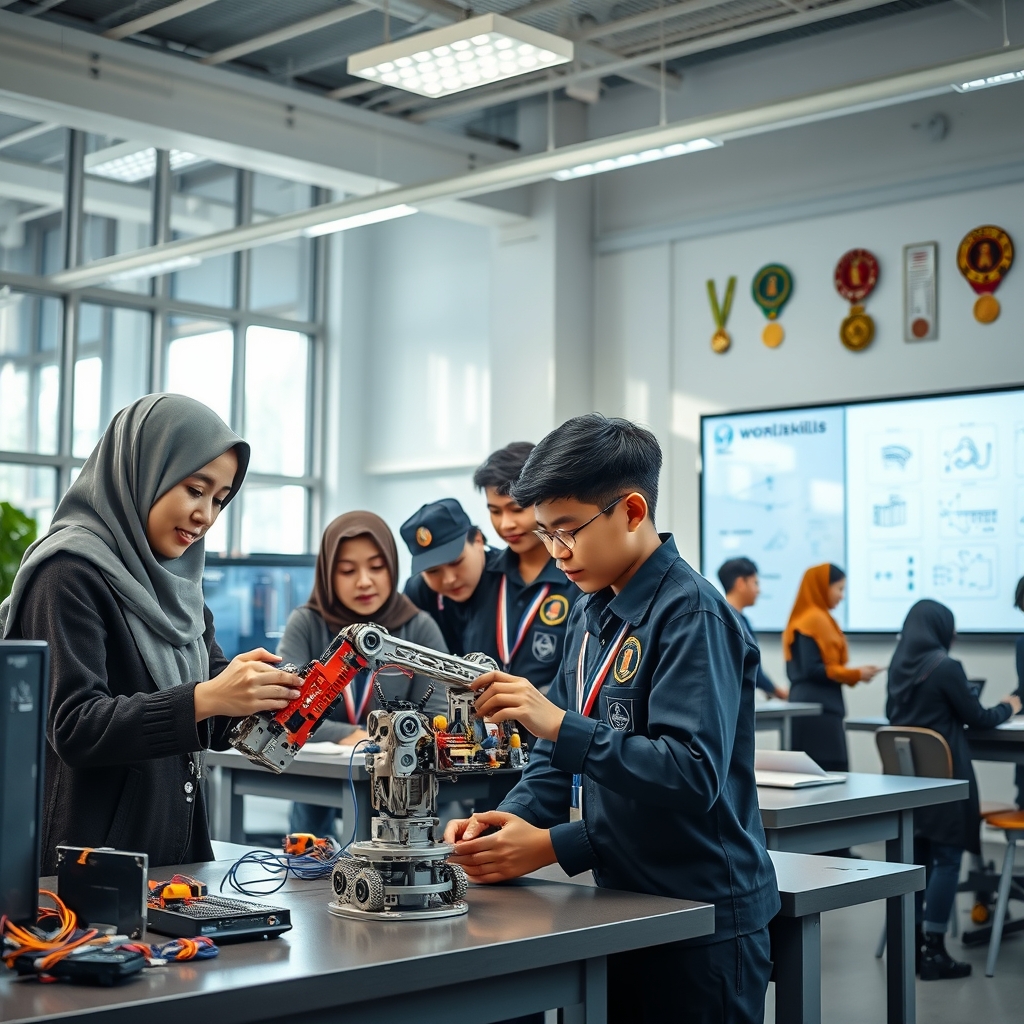
In the heart of Jakarta, a quiet revolution is unfolding within the walls of Sekolah Unggulan Nasional. Here, students are not just preparing for exams—they are training to outthink, outcreate, and outperform their global peers. The recent triumph of Indonesian students at the Juara Worldskills Competition, where they clinched multiple medali emas Worldskills, is not an isolated achievement. It is the result of a deliberate, decades-long transformation in how the nation’s elite schools approach education: by blending implementasi kurikulum internasional with an unshakable commitment to kreativitas belajar siswa.
The Worldskills Effect: More Than Just a Medal
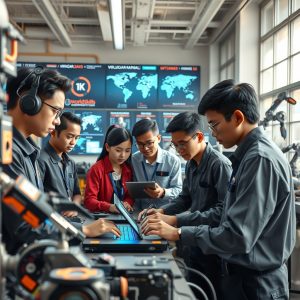
The Worldskills Competition is often described as the “Olympics of vocational skills,” but its impact stretches far beyond the glitter of gold. For students from sekolah berstandar global, participation in this event is a masterclass in resilience, precision, and innovation. Take, for example, the story of Aditya, a 19-year-old from a Sekolah Unggulan Nasional in Bandung, who spent 18 months perfecting his mechatronics project. His journey was not just about mastering technical skills; it was about learning to collaborate with peers from Germany, troubleshoot under pressure with a team from Japan, and present his work to judges who demanded nothing short of excellence. When he stood on the podium, his medal was a testament to more than just his talent—it was proof that Indonesia’s education system is capable of producing prestasi siswa berkelas dunia.
From Classroom to Global Stage: The Role of International Curricula
The secret behind these successes lies in the program kelas internasional adopted by leading schools. These programs do not merely translate foreign curricula into Indonesian; they adapt them to local contexts while maintaining global standards. For instance, schools like SMK Telkom Jakarta have integrated the International Baccalaureate (IB) Career-related Programme with vocational training, creating a hybrid model that nurtures both academic rigor and hands-on expertise. This approach ensures that students are not just theoretically proficient but also practically adept—ready to tackle real-world challenges from day one.
Moreover, these curricula emphasize interdisciplinary learning. A student in a kelas internasional might spend the morning coding a robot, the afternoon analyzing case studies on sustainable urban design, and the evening collaborating with peers from a partner school in Singapore. This fluidity between disciplines mirrors the demands of the modern workforce, where siloed knowledge is no longer sufficient. It is no surprise, then, that graduates from these programs are not just winning competitions—they are securing internships at multinational corporations and launching startups before they even finish high school.
Cultivating an Ecosystem of Creativity and Competence
Winning a medali emas Worldskills is not the work of a single brilliant student or a charismatic teacher. It is the result of an entire ekosistem sekolah kreatif—a carefully curated environment where every element, from the curriculum to the classroom design, is engineered to foster pengembangan bakat kreatif. Schools like SMAN 8 Jakarta have taken this to heart, transforming their campuses into living laboratories of innovation. Here, students have access to fasilitas pendidikan modern, such as 3D printers, virtual reality labs, and makerspaces, where they can prototype their ideas without fear of failure.
The Power of Competition: From Local to Global
The journey to Worldskills often begins with smaller, local lomba kompetensi siswa. These competitions serve as a proving ground, where students refine their skills, learn to manage stress, and receive feedback from industry experts. For many, these events are their first taste of what it means to compete at a high level. Take the example of the Ajang Talenta Nasional, a national competition that has become a launchpad for Worldskills contenders. Schools use these events to identify promising students and provide them with targeted training, mentorship, and resources to elevate their performance.
But the true magic happens when these competitions are not treated as one-off events but as integral parts of the school’s culture. At Sekolah Unggulan Nasional, participation in competitions is woven into the academic calendar. Students are encouraged to explore their passions, whether in robotics, graphic design, or culinary arts, and are given the time and space to pursue them. This culture of competition does more than just prepare students for the global stage—it teaches them that excellence is a habit, not an accident.
Preparing for a World Without Borders
The ultimate goal of these schools is not just to produce medalists but to cultivate kompetensi siswa internasional—students who are as comfortable negotiating a contract in English as they are debugging a piece of code or designing a sustainable building. This requires more than just technical skills; it demands cultural fluency, adaptability, and a global mindset. To achieve this, schools are forging kolaborasi pendidikan internasional with institutions around the world. Through exchange programs, joint projects, and virtual collaborations, students are exposed to diverse perspectives and ways of thinking.
For example, students at SMK Negeri 1 Surabaya participate in an annual exchange program with a vocational school in South Korea, where they work on joint projects with their Korean peers. These collaborations are not just about learning new skills; they are about understanding how to navigate cultural differences, communicate effectively across languages, and build relationships that transcend borders. Such experiences are invaluable in preparing students for a future where the workplace is increasingly global and interconnected.
The Role of Teachers: Mentors, Not Just Instructors
Behind every successful student is a teacher who has gone above and beyond the call of duty. In sekolah berstandar global, teachers are not just instructors—they are mentors, coaches, and facilitators of learning. They work tirelessly to stay updated with the latest industry trends, often pursuing sertifikasi kompetensi global to ensure their skills remain relevant. For instance, teachers at SMK Negeri 2 Yogyakarta regularly attend workshops and training sessions conducted by industry partners, such as Siemens and Microsoft, to bring real-world expertise into the classroom.
These teachers also play a crucial role in nurturing the soft skills that are often overlooked in traditional education. They encourage students to think critically, communicate effectively, and collaborate with others—skills that are just as important as technical proficiency. In doing so, they help students develop the confidence and resilience needed to thrive in high-pressure environments like the Worldskills Competition.
Building a Legacy of Excellence
The impact of these schools extends far beyond the individual achievements of their students. By consistently producing prestasi siswa berkelas dunia, they are elevating the reputation of Indonesia’s education system on the global stage. More importantly, they are proving that excellence is not the preserve of a select few but is achievable for any student with the right support, resources, and mindset. These schools are not just preparing students for the future—they are shaping it, one medal, one project, and one innovative idea at a time.
As Indonesia continues to make its mark in international competitions like Worldskills, the lessons learned from these Sekolah Unggulan Nasional are clear. Success is not about chasing medals or accolades; it is about creating an environment where students are empowered to explore, innovate, and push the boundaries of what is possible. It is about recognizing that the true measure of education is not just what students know but what they can do with that knowledge. And perhaps most importantly, it is about instilling in them the belief that they are not just students—they are the architects of a brighter, more innovative future.