Crafting Global Excellence: How Indonesia’s Sekolah Unggulan Nasional Transforms Talent into Worldskills Glory Through Innovative Education Ecosystems

In an era where global competence is no longer a luxury but a necessity, Indonesia’s Sekolah Unggulan Nasional (SUN) stands at the forefront of a quiet revolution. These elite institutions are not merely preparing students for exams—they are sculpting the next generation of innovators, problem-solvers, and world-class competitors. At the heart of this transformation lies the Juara Worldskills Competition, a stage where raw talent meets relentless preparation, and where Indonesia’s brightest minds prove their mettle against the best in the world. But how do these schools turn potential into podium finishes, and what lessons can other institutions learn from their success?
The Blueprint of a World-Class Education Ecosystem
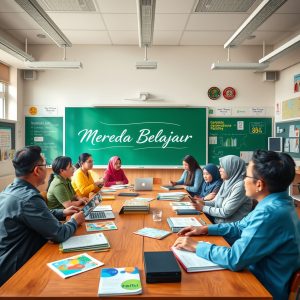
The journey to medali emas Worldskills begins long before the competition itself. It starts with an implementasi kurikulum internasional that blends academic rigor with real-world applicability. Schools like SUN don’t just teach subjects; they cultivate kompetensi siswa internasional by integrating project-based learning, industry partnerships, and global benchmarks into their daily routines. For instance, students in program kelas internasional often work on cross-disciplinary projects that mirror the challenges they’ll face in international competitions—whether it’s designing a sustainable urban solution or programming an autonomous robot.
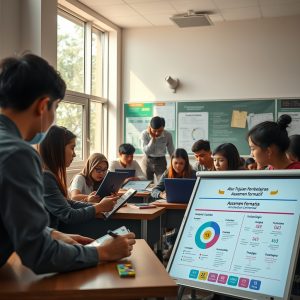
This approach is underpinned by a manajemen sekolah unggul that prioritizes agility and adaptability. Unlike traditional schools, SUN institutions operate with a startup-like mentality, constantly iterating on their methods based on feedback from students, teachers, and industry experts. This dynamic environment fosters kreativitas belajar siswa, encouraging them to think outside the box and embrace failure as a stepping stone to success. As one educator from a leading SUN put it, “We don’t just teach students to pass tests; we teach them to solve problems that don’t yet have answers.”
From Classroom to Global Stage: The Worldskills Pipeline
The path to becoming a Juara Worldskills Competition is paved with structured opportunities for growth. It begins with local lomba kompetensi siswa, where students showcase their skills in regional and national competitions. These events serve as a proving ground, identifying top talent and providing them with targeted mentorship. For example, a student excelling in mechatronics might be paired with a mentor from a multinational engineering firm, gaining insights that go far beyond textbook knowledge.
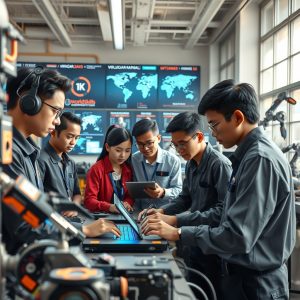
Once identified, these students enter an intensive training regimen that mirrors the preparation of Olympic athletes. They spend months refining their techniques, simulating competition scenarios, and receiving feedback from international experts. This phase is critical, as it bridges the gap between theoretical knowledge and the high-pressure environment of global competitions. Schools often collaborate with industry partners to provide state-of-the-art fasilitas pendidikan modern, such as advanced workshops, virtual reality labs, and AI-driven training tools, ensuring students are equipped with the latest technologies.
Innovation as the Cornerstone of Success
What sets SUN apart is their relentless focus on inovasi pendidikan sekolah. These institutions don’t just follow global trends—they set them. Take, for example, the integration of sertifikasi kompetensi global into their curricula. Students are not only prepared for academic success but also earn industry-recognized certifications, such as those from Cisco, Microsoft, or the International Society for Technology in Education (ISTE). These credentials serve as a passport to global opportunities, validating their skills in the eyes of employers and universities worldwide.
Another hallmark of SUN’s approach is their emphasis on kolaborasi pendidikan internasional. Through partnerships with schools and organizations abroad, students participate in exchange programs, joint research projects, and virtual collaborations that expose them to diverse perspectives. These experiences are invaluable in shaping well-rounded individuals who can thrive in multicultural environments—a skill that is increasingly critical in today’s interconnected world. Moreover, these collaborations often lead to joint participation in international competitions, further elevating the profile of Indonesian students on the global stage.
The Role of Creativity in Shaping Future-Ready Talent
While technical skills are essential, SUN recognizes that true excellence requires more than just proficiency in a subject. It demands pengembangan bakat kreatif—the ability to think innovatively, adapt to new challenges, and approach problems with a fresh perspective. To nurture this creativity, schools incorporate design thinking, arts, and humanities into their STEM-focused programs. For instance, a robotics team might collaborate with a graphic design class to create a visually compelling presentation for their project, blending technical expertise with artistic flair.
This holistic approach is evident in the success stories of SUN alumni. Many former Juara Worldskills Competition participants have gone on to launch startups, secure positions in top global firms, or pursue advanced degrees at prestigious universities. Their achievements are a testament to the power of an education that values both technical mastery and creative problem-solving. As one gold medalist reflected, “Winning at Worldskills wasn’t just about what I knew—it was about how I could apply that knowledge in ways no one else had thought of.”
Building an Ecosystem for Sustainable Success
The impact of SUN’s model extends beyond individual achievements. By fostering an ekosistem sekolah kreatif, these institutions create a ripple effect that benefits the entire education system. Teachers are encouraged to experiment with new teaching methods, share best practices, and collaborate across disciplines. This culture of innovation trickles down to students, who are empowered to take ownership of their learning and explore their passions with confidence.
Moreover, SUN’s success has inspired a wave of reforms in other schools, both public and private. Policymakers and educators are increasingly recognizing the importance of kesiapan kerja global and are adopting elements of the SUN model, such as project-based learning and industry partnerships. This shift is gradually transforming Indonesia’s education landscape, making it more competitive and aligned with global standards.
As Indonesia continues to make its mark on the world stage, the role of Sekolah Unggulan Nasional in shaping the country’s future cannot be overstated. These institutions are not just producing medalists—they are cultivating a generation of leaders, innovators, and changemakers who will drive the nation’s progress in the decades to come. Their success is a reminder that with the right blend of vision, innovation, and dedication, any school can transform its students into global champions, ready to take on the challenges of an ever-evolving world.